Strange as it may sound, today’s collective West is beginning to resemble the late Soviet Union—marked by internal contradictions, an overregulated economy, and an official ideology no one truly believes in. Only instead of communism, the mantras are “freedom,” “democracy,” and “the rule of law.”
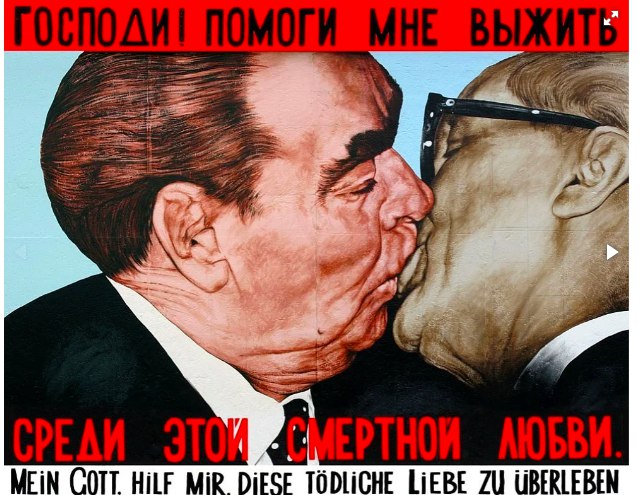
Those who never lived under Soviet rule often underestimate the depth of that system’s hypocrisy. “Cutting-edge” socialist medicine meant crumbling hospitals and under-the-table bribes. “Free” housing meant three generations crammed into one apartment. A “classless society” turned out to be rigidly stratified by invisible class barriers embedded in the school system, universities, and bureaucracy. Publicly, people repeated the official dogma. Privately, they laughed at it.
Today, much of Western political discourse feels eerily similar. If you put typically Soviet phrases like “people’s democracy,” “enhanced obligations,” or “international solidarity” into a speech by a European official or a White House aide, most ordinary citizens will not bat an eye. Nor will thousands of civil servants. After the decades of strategic ambiguity, the speechwriting of many Western politicians and intellectuals has become an amorphous substance – offending no one, meaning little.
People pretend to believe in this rhetoric because an entire machine of grants, fellowships, and appointments depends on it. Hypocrisy is comfortable. After all, most people only think they want truth and justice—what they really want is stability. A Harvard professor, who studied honesty, caught on falsifying data to prove her research is a vivid and ironic example of the current state of affairs.
That might have continued—if not for the war. The invasion of Ukraine shattered the illusion that words alone can sustain moral authority. Crisis demands clarity: about who we are, what we believe, and what price we’re willing to pay. That demand is uncomfortable. It reveals a dissonance between the West’s self-image and its real behavior. And in that discomfort, we often lash out—not at the aggressor, nor at ourselves, but at the victim who forces us to experience moral unease. Anyone who has ever walked past school abuse as a teenager and done nothing knows this feeling.
For over three years, the West has circled around bully-Russia while it strangles Ukraine. To be fair, it hasn’t stood by silently: it has expressed concern, imposed sanctions, and sent weapons—carefully calibrated to avoid escalation. Enough to help Ukraine survive, but not enough to help it win. Between February 2022 to February 2025 Russia earned $335 billion from hydrocarbon sales to NATO countries—roughly equivalent to its pre-war levels. Meanwhile, aid to Ukraine from those same countries totaled $236 billion. Now, some of that is being recalled as debt.
The “coalition of the willing” debates whether to send troops, while the “fraction of the unwilling” within the coalition quickly clarified it was far enough from the battlefield to stay uninvolved. Some nations, recalling Russian tanks on their own streets in living memory, decided to let the jungle rule: throw the predator a victim and hope he feeds elsewhere next.
That sort of thinking needs to be dressed up in respectable language. Thus we hear that Ukraine is “not ready” to join the EU, NATO, or the “family of civilized nations.” Eastern European states, already EU members and under NATO’s umbrella, seem to think enlargement can pause here: better for Ukraine to remain a buffer for the EU than become a member. Strip away the diplomatic varnish and you’ll find that the blood of other people’s children matters less than domestic agricultural subsidies.
Ukrainians believed in Western values long before they gained independence. They looked Westward from behind the Iron Curtain with the faith of converts. The reality has catapulted them from illusions into realpolitik. They learned the hard way that the soaring rhetoric of international organizations carries about as much weight as the Budapest Memorandum. That is to say: none.
Of course, this isn’t the first time values have come under pressure. In the 1930s, Spain’s republic was left to fend for itself. So was Czechoslovakia. Back then, too, the “coalition of the willing” failed to find the will or the troops to defend the Sudetenland. Soon after it had to find both to defend itself. Poland and Hungary, who once helped dismember Czechs, now seem tempted to do the same to Ukraine. The logic of appeasement hasn’t changed—nor has the likely outcome.
Now the stakes are as high as they were a century back. The local turmoil tolerated in the 1930s in Spain, Austria and Czechoslovakia detonated in the 1940s globally. With some knowledge of history, it`s easy to imagine Ukrainians forced by Moscow to fight against Europe in the 2030s – if Ukraine is subjugated.
Perhaps the current rise of far-right populism across the West is the price of two decades of hypocrisy. While elites were ranting about values and principles, the real situation of the middle-class continued to worsen in terms of incomes, housing and, finally, security. Seeking comfort in even worse alternatives might seem irrational. But for many voters, far-right leaders simply embody a refusal to accept the current reality. It’s protest voting—just as the far right’s rise in the 1930s was fueled by the middle class’s rejection of the post-World War I liberal yet hypocritical order.
So unless the West recalibrates its moral compass, the 2030s may end up looking disturbingly like the 1930s. With little hope of moral leadership from across the Atlantic in the next few years, Europe will have to step up. It will be long, expensive, and painful. But the alternative is likely worse.
It is no longer just about tanks, missiles and treaties—it’s about recovering the moral clarity to match the ideals with the actions. Hypocrisy buys time, not safety. Eventually, the bill arrives.
And when it does, it’s always more than we thought we owed.